



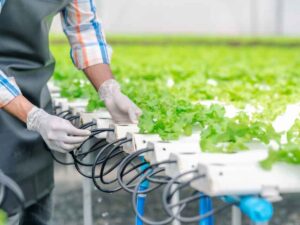
As agriculture continues to evolve in the face of climate change and increasing food demands, digital phenotyping is emerging as a game-changer in crop research and field management. At Plant-Ditech, we are proud to lead this innovation through our PlantArray system, offering automated, high-resolution phenotyping solutions for modern agriculture.
In this article, we’ll answer the top questions about digital phenotyping in crops and how the PlantArray platform supports research and farming with actionable, real-time insights.
What is digital phenotyping, and how is it applied in crop research?
Digital phenotyping refers to the use of advanced sensors, imaging, and computational tools to measure plant traits (phenotypes) in real time and under real-world conditions. In crop research, this approach enables scientists to track growth patterns, water use, stress responses, and much more — all without destructive sampling.
The PlantArray system applies digital phenotyping by automating the monitoring and analysis of whole plant arrays under a controlled environment, helping researchers rapidly generate meaningful physiological data.
What are the key technologies used in digital phenotyping for crops?
Digital phenotyping incorporates a suite of technologies, including:
- Environmental and soil sensors
- Weighing lysimeters
- Infrared thermography
- Automated irrigation control
- Data analytics and cloud computing
- AI-driven image analysis
| Feature / Method | Manual | Imaging-Based | The PlantArray |
|---|---|---|---|
| Accuracy | Low–Moderate (Subjective bias) | Moderate–High | High (Quantitative physiological data) |
| Data Collection Frequency | limited as it takes time | Daily | Real-time (up to every 3 minutes) |
| Scalability | Low | Medium–High | High (modular) |
| Traits Measured | Visual traits (leaf size, color) | Morphology, biomass, color indices | Transpiration, WUE, biomass, stress |
| Setup Cost | Medium–High | High | Modular, depending on quantity. High cost vs. unit value |
| Reproducibility | Low | Medium | High |
How does digital phenotyping improve crop yield and quality?
By enabling researchers and breeders to pinpoint the most resilient, water-efficient, or high-yielding genotypes under varying conditions, digital phenotyping significantly enhances selection processes. This results in:
- Faster breeding cycles
- Optimized irrigation strategies
- Identification of stress-tolerant cultivars
The PlantArray platform plays a key role by providing real-time functional data, supporting trait discovery linked to yield and quality.
What challenges are associated with implementing digital phenotyping in agriculture?
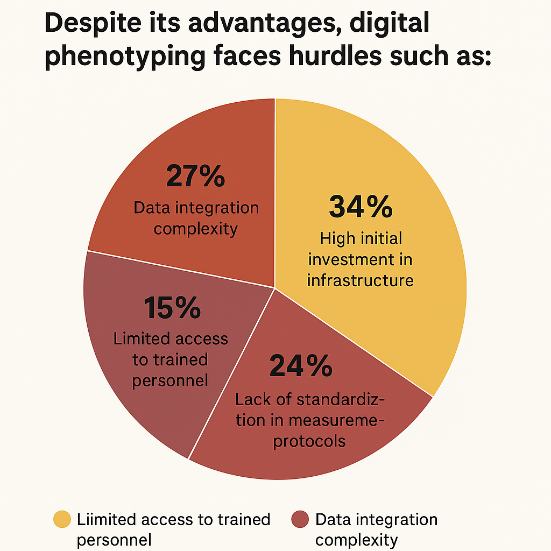
Despite its advantages, digital phenotyping faces hurdles such as:
- High initial investment in infrastructure
- Data integration complexity
- Lack of standardization in measurement protocols
- Limited access to trained personnel
What role does artificial intelligence play in digital phenotyping of crops?
AI is revolutionizing phenotyping by:
- Enhancing image-based trait extraction
- Predicting plant behaviour under future scenarios
- Detecting anomalies or diseases automatically
- Automating large-scale data processing
At Plant-Ditech, we incorporate machine learning models to support high-throughput analytics within PlantArray, helping uncover subtle patterns that drive innovation.
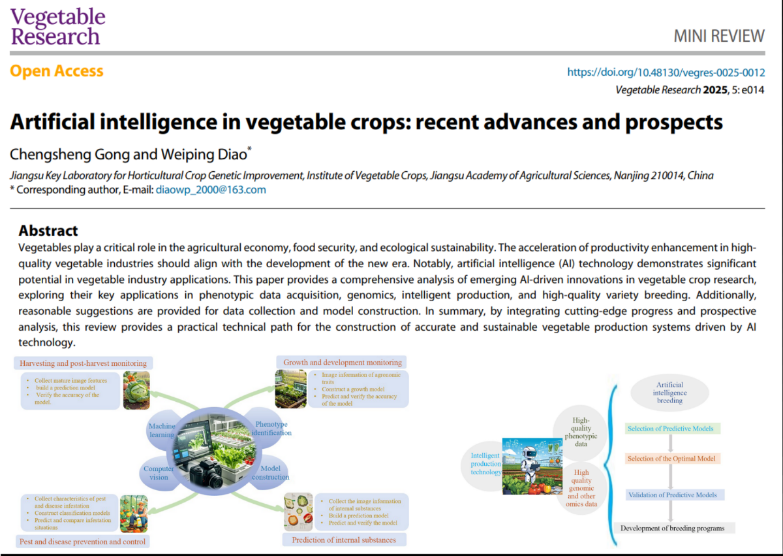
High-quality phenotypic data is essential for accurate breeding and AI-based predictions✨
Read. Learn more about it here
How do you choose the right digital phenotyping platform for your research?
Choosing the right platform depends on:
- Research goals (e.g., drought tolerance, nutrient uptake)
- Crop types and growth conditions
- Budget and scalability
- Integration with existing systems
- Data resolution and frequency
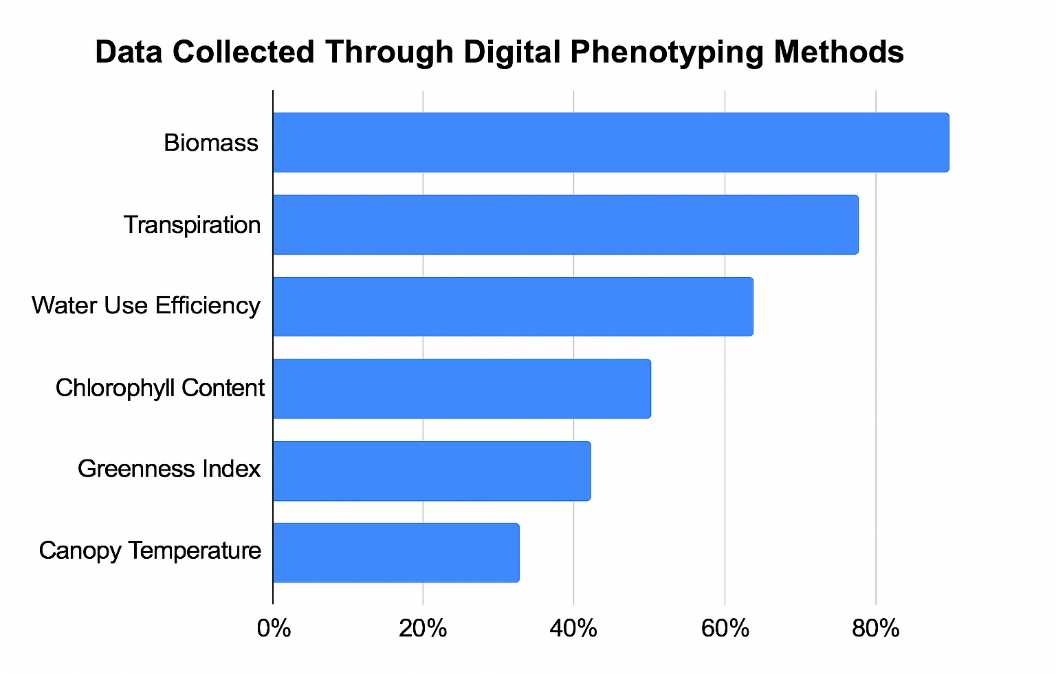
What data is typically collected through digital phenotyping methods?
The results indicate that physiological measurements such as biomass, transpiration, and water-use efficiency are prominent and highly prioritized in digital phenotyping. These traits are essential for evaluating plant function and stress responses in real time, making them central in many research and breeding programs, especially with platforms like PlantArray that specialize in continuous functional data.
How does digital phenotyping compare to traditional phenotyping techniques?
Compared to traditional methods, digital phenotyping is:
- Faster: Continuous automated measurements
- More accurate: Reduced human error
- Non-destructive: No need to uproot plants
- High-throughput: Can monitor large populations simultaneously
PlantArray offers all these benefits, enabling faster discovery cycles and better reproducibility in research outcomes.
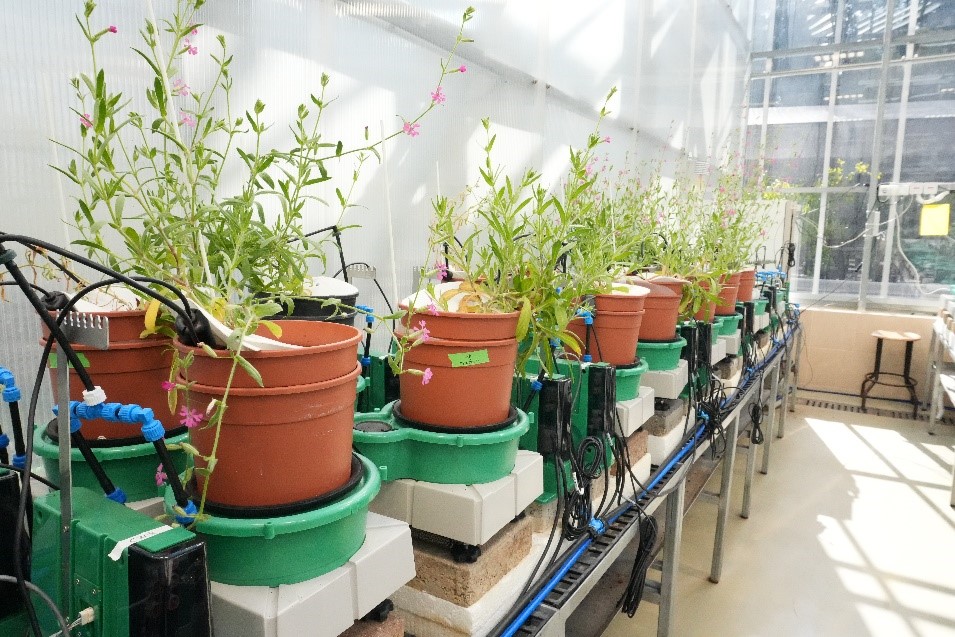
Digital phenotyping uses advanced sensors and AI to measure plant traits like biomass, transpiration, and water-use efficiency in real time. These physiological traits are critical for improving yield and stress tolerance. Plant-Ditech’s PlantArray system excels by delivering high-accuracy, automated data, making it ideal for research and breeding. Despite some challenges like cost and data complexity, digital phenotyping offers clear advantages over traditional methods in precision, speed, and scalability.
What is Crop Phenotyping?
Agriculture faces unprecedented challenges. By 2050, global food production must increase substantially to feed a growing population while confronting climate change, resource scarcity, and environmental pressures. Traditional breeding methods, though proven, cannot keep pace with these accelerating demands. Crop phenotyping has emerged as a transformative technology that bridges the gap between genetic potential and agricultural productivity, offering researchers and breeders precise tools to develop resilient, high-yielding crop varieties.
Crop phenotyping refers to the comprehensive measurement and analysis of plant characteristics, including growth patterns, physiological responses, structural traits, and stress tolerance. While genotyping reveals a plant’s genetic blueprint, phenotyping shows how those genes express themselves in real-world conditions. This distinction matters profoundly because environmental factors interact with genetics to determine actual crop performance in the field.
What is Multi-Dimensional Data Collection in Phenotyping?
According to research published in the journal Frontiers in Plant Science, phenotyping encompasses multi-dimensional data collection from cellular to canopy level. The technology evaluates parameters such as transpiration rates, water-use efficiency, biomass accumulation, photosynthetic capacity, and stress responses. These measurements provide actionable insights that accelerate breeding programs and optimize crop management strategies.
How Do Automated Phenotyping Systems Transform Research?
Modern crop phenotyping platforms, particularly automated systems, transform months of manual field observations into continuous, objective data streams. The PlantArray system from plant-ditech exemplifies this advancement, delivering high-resolution physiological measurements that capture plant-environment interactions with unprecedented accuracy. This capability enables researchers to identify superior genotypes earlier in the breeding pipeline, reducing development time from years to months.
Why Has Crop Phenotyping Become Critical?
The urgency surrounding crop phenotyping stems from a fundamental bottleneck in agricultural research. Genome sequencing technologies have advanced rapidly, making genetic information readily available for numerous crop species. However, as documented in research published in Molecular Plant, the ability to measure and interpret how these genes manifest as observable traits has lagged significantly behind. This phenotyping bottleneck limits breeding efficiency and slows the development of improved varieties, creating what scientists now recognize as one of the major obstacles hindering crop breeding and functional genomics studies.
Why Is Phenotyping More Critical in the Face of Climate Change?
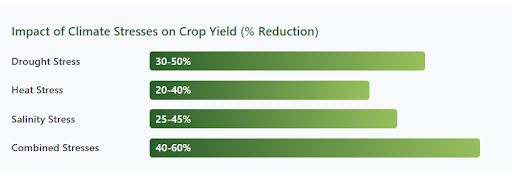
Climate variability intensifies this challenge. Crops must now withstand unpredictable weather patterns, prolonged droughts, heat stress, and emerging pest pressures. According to studies in controlled environment agriculture, identifying which genetic combinations confer resilience requires systematic evaluation under diverse environmental conditions, something traditional phenotyping methods struggle to achieve at scale. High-throughput phenotyping addresses this limitation by enabling simultaneous assessment of hundreds of plants across multiple traits and stress scenarios, providing the rapid turnaround times modern breeding programs demand.
How Does Automated Phenotyping Reduce Research Costs?
Economic pressures compound these technical challenges. Manual phenotyping remains labor-intensive, subjective, and prone to measurement errors. Field assessments often require destructive sampling, limiting longitudinal studies. Research indicates that destructive, low-throughput phenotyping protocols are steadily being replaced by non-invasive high-throughput methods that deliver superior accuracy and reproducibility. Automated phenotyping platforms eliminate these constraints through non-invasive, continuous monitoring that generates reproducible data while reducing labor costs and human error, ultimately accelerating breeding cycles and shortening time to market for new varieties.
How Does High-Throughput Phenotyping Work?
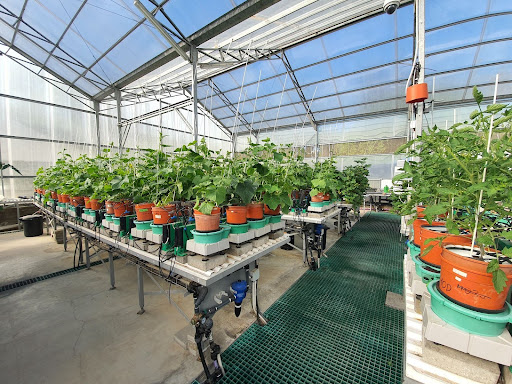
High-throughput phenotyping (HTP) integrates advanced sensor technologies, automated data collection, and analytical software to evaluate plant traits at unprecedented scale and precision. Unlike conventional methods that rely on periodic manual measurements, HTP systems operate continuously, capturing dynamic physiological responses as they occur. This temporal resolution reveals how plants respond to environmental changes hour by hour, providing insights impossible to obtain through snapshot observations.
How Do Sensor Technologies Enable Precision Phenotyping?
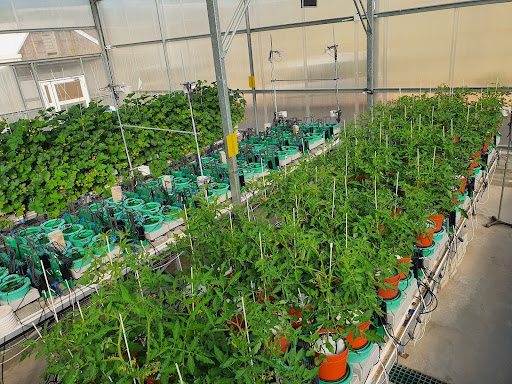
The process begins with sensor selection based on research objectives. RGB imaging captures morphological traits such as plant height, leaf area, and canopy structure. Multispectral and hyperspectral sensors assess physiological parameters including chlorophyll content, water stress, and nutrient status by analyzing light reflection patterns across different wavelengths. Thermal imaging detects transpiration rates and stomatal conductance through temperature variations, while gravimetric systems measure water uptake and growth dynamics through precise weight monitoring.
| Technology | Traits Measured | Temporal Resolution | Cost Range | Best Application |
|---|---|---|---|---|
| RGB Imaging | Plant height, leaf area, canopy structure, growth rate | Minutes to hours | $5K-$50K | Morphological screening, field phenotyping |
| Multispectral/Hyperspectral | Chlorophyll content, NDVI, stress indices, nutrient status | Minutes to hours | $30K-$200K | Stress detection, disease monitoring |
| Thermal Imaging | Canopy temperature, transpiration, stomatal conductance | Seconds to minutes | $10K-$80K | Water stress, drought tolerance |
| Gravimetric (PlantArray) | Transpiration, WUE, growth, water relations | Real-time (continuous) | $100K-$500K | Physiological studies, drought screening |
| LiDAR | 3D structure, plant height, lodging, biomass | Minutes | $50K-$300K | Structural phenotyping, field mapping |
| FT-MIR Spectroscopy | Protein, carbohydrates, micronutrients, quality | Minutes per sample | $40K-$150K | Nutritional phenotyping, quality breeding |
What Are the Key Advantages of Gravimetric Phenotyping?
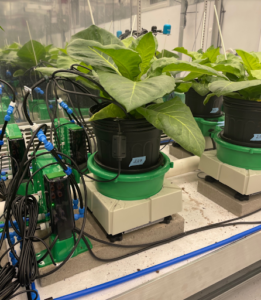
Plant-ditech’s PlantArray platform employs gravimetric phenotyping, which offers distinct advantages for physiological trait measurement. Each plant grows in an individually monitored pot connected to load cells that track weight changes with milligram precision. By controlling irrigation to predefined thresholds, the system measures actual transpiration, water-use efficiency, and growth responses under various stress conditions. This approach proves particularly valuable for drought tolerance screening and water-relation studies.
The PlantArray System: 500 Daily Measurements Per Plant
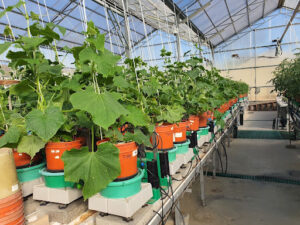
What sets plant-ditech apart is the PlantArray system’s ability to capture dynamic plant responses 500 times per day. This unprecedented temporal resolution reveals minute-by-minute changes in transpiration, stomatal conductance, and water uptake patterns that other systems miss entirely. The platform combines advanced weighing scales with self-controlled irrigation valves, providing automated, personalized feedback irrigation for each plant. Built on over 10 years of research and development using weighing lysimeters, PlantArray achieves exceptionally high signal-to-noise ratios that ensure reliable, reproducible results across diverse experimental conditions.
Data Processing and Analysis
Raw sensor data undergoes sophisticated processing to extract meaningful phenotypic parameters. Machine learning algorithms identify patterns, classify stress responses, and predict performance outcomes based on early-stage measurements. The SPAC (Soil-Plant-Atmosphere Continuum) software integrated within plant-ditech systems transforms millions of data points into interpretable physiological metrics, enabling researchers to make informed selection decisions rapidly. This proprietary software performs real-time statistical analysis of plants’ yield potential, offering boxplot representations and WUE/resilience graph viewers that make complex data immediately accessible to researchers without programming backgrounds.
Environmental Control Integration
Advanced phenotyping platforms incorporate environmental monitoring to contextualize plant responses. Temperature, humidity, light intensity, and soil conditions are tracked simultaneously with plant measurements. This integration allows researchers to distinguish genetic effects from environmental variability and identify genotype-by-environment interactions that determine field performance.
How Are Phenotyping Platforms Applied in Crop Breeding Programs?
Crop breeding has evolved from visual selection in small plots to data-driven programs evaluating thousands of lines across multiple locations. Phenotyping technologies underpin this transformation by providing the quantitative trait data needed for genomic prediction models and marker-assisted selection. Studies documented in Frontiers in Plant Science demonstrate that combining high-throughput phenotyping technology with large-scale QTL or GWAS analysis not only expands understanding of crop development but provides novel tools for crop genomics and gene characterization. Breeders leveraging these systems can now identify valuable genetic combinations years earlier than traditional methods allow, dramatically accelerating variety development timelines.
How Does Phenotyping Accelerate Drought Tolerance Breeding?
Drought tolerance breeding exemplifies phenotyping’s impact. Traditional screening requires years of field trials across diverse rainfall conditions, with subjective assessments of wilting, leaf rolling, or yield reduction. Automated phenotyping measures transpiration dynamics, osmotic adjustment capacity, and root growth patterns under controlled water stress, identifying tolerant genotypes within weeks. Research published in peer-reviewed journals confirms that platforms like the PlantArray system have successfully screened wheat and cowpea accessions for drought resistance, providing critical physiological data that correlates strongly with field performance. These studies demonstrate how plant-ditech technology informed variety selection and significantly advanced breeding timelines, reducing development cycles from years to months.
| Study | Crop | Technology Used | Key Finding | Time Saved |
|---|---|---|---|---|
| Zhang et al., 2024 | Wheat | RGB + Hyperspectral imaging + GWAS | Identified 740 marker-trait associations for drought resistance | 3-4 years |
| Guadarrma-Escobar et al., 2024 | Multiple crops | Image-based transpiration efficiency (iTE) | Novel iTE metric detects drought tolerance mechanisms | 2-3 years |
| Pugh et al., 2025 | Sorghum | UAV + Machine learning | Stay-green trait screening in breeding program | 1-2 years |
| PlantArray Studies, 2024 | Barley diversity set | Gravimetric phenotyping | Distinct drought response strategies identified | 2-3 years |
Disease Resistance Evaluation
Disease resistance evaluation benefits similarly from phenotyping precision. Rather than waiting for visible symptoms, researchers can detect early physiological changes indicating pathogen infection or activation of defense responses. Studies show that high-throughput phenotyping platforms enable rapid assessment of plant health and disease-related traits, providing detailed measurements that enhance the capacity of plant breeders and agronomists to select resistant lines. This capability accelerates resistance screening while reducing the need for extensive field disease nurseries, allowing breeding programs to respond more quickly to emerging pathogen threats and develop resistant varieties before diseases become widespread.
What Are the Main Challenges in Crop Phenotyping?
Implementing phenotyping systems involves substantial initial investment in equipment, infrastructure, and training. While costs vary depending on platform complexity and automation level, even modular systems require dedicated resources. However, the return on investment typically justifies these expenses through accelerated breeding cycles, improved selection accuracy, and reduced long-term operational costs.
How Does Plant-Ditech Simplify Complex Data Management?
Data management presents another significant challenge. High-throughput platforms generate enormous datasets requiring robust storage solutions, standardized formats, and analytical pipelines. Integrating phenotypic data with genomic, metabolomic, and environmental information demands specialized bioinformatics expertise. Many research programs struggle with data processing bottlenecks that limit their ability to extract actionable insights from collected measurements.
Why Should My Institution Adopt Standardized Phenotyping Protocols?
Standardization across institutions remains problematic. Different platforms, sensors, and protocols produce datasets that are difficult to compare or combine. The phenotyping community recognizes this limitation and actively works toward establishing common data formats, calibration standards, and quality metrics. Platforms supporting open data formats and API connectivity, such as those provided by plant-ditech, facilitate integration efforts and enable collaborative research across institutions.
Technical Limitations
Certain traits remain difficult to phenotype non-destructively. Root architecture, for instance, typically requires excavation or specialized imaging systems. Internal biochemical processes often necessitate tissue sampling. While technologies like X-ray computed tomography enable root visualization without excavation, these methods add complexity and cost to phenotyping workflows.
Field versus Controlled Environment Trade-offs
Controlled environment phenotyping offers precision and reproducibility but may not fully represent field conditions. Greenhouse plants experience different light quality, airflow, and root volume compared to field-grown crops. Conversely, field phenotyping captures realistic growing conditions but faces challenges from spatial heterogeneity, weather variability, and logistical constraints. Successful breeding programs often combine both approaches, using controlled environments for initial screening and field validation for advanced lines.
What Phenotyping Technologies and Sensor Systems Are Available?
Remote sensing methodologies dominate modern phenotyping applications. RGB cameras provide cost-effective morphological assessment, capturing traits like emergence timing, growth rates, flowering dates, and canopy closure. Image analysis algorithms extract quantitative parameters from these visual records, automating measurements that previously required manual observation.
What Is Spectral Imaging for Physiological Assessment?
Spectral imaging technologies reveal physiological information invisible to conventional cameras. Vegetation indices calculated from specific wavelength combinations indicate photosynthetic activity, nitrogen status, water content, and stress levels. These indices enable early detection of problems before visible symptoms appear, allowing proactive intervention or timely elimination of underperforming lines.
Thermal Imaging for Water Relation Studies
Thermal imaging assesses plant water relations through canopy temperature measurements. Transpiring plants cool themselves through evaporative water loss, so water-stressed plants exhibit elevated leaf temperatures. This relationship provides a rapid, non-contact method for screening drought responses across large populations. Thermal data complements spectral measurements, offering converging evidence of stress or vigor.
Gravimetric phenotyping measures actual water use with exceptional precision. By continuously monitoring pot weight, these systems calculate real-time transpiration rates, growth accumulation, and irrigation requirements. Unlike imaging-based estimates, gravimetric measurements directly quantify water flux through the plant, providing fundamental physiological data for water-relation studies.
What Are the Key Capabilities of the PlantArray Platform?
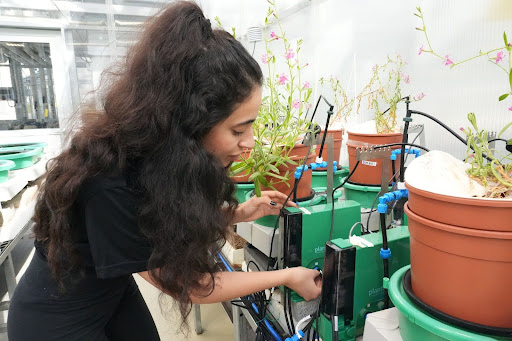
The PlantArray platform demonstrates gravimetric phenotyping’s power for understanding plant water dynamics. Load cells detect weight changes as small as milligrams, resolving transpiration patterns throughout day-night cycles. Automated irrigation maintains precise soil water content, enabling controlled stress imposition and recovery studies. This level of control and measurement resolution proves invaluable for dissecting drought tolerance mechanisms and validating genetic modifications aimed at improving water-use efficiency. The system’s modular architecture ensures that failure in one unit never affects others, providing uninterrupted data collection even in complex multi-plant experiments. Each control unit supports up to four additional sensors, allowing researchers to expand measurement capabilities as their research demands evolve.
How Does Phenotyping Integrate with Genomic Research?
The true potential of phenotyping emerges through integration with genomic tools. Genome-wide association studies (GWAS) identify genetic variants associated with specific traits by correlating genotype data with measured phenotypes across diverse germplasm collections. High-quality phenotypic data determines the power and resolution of these genetic mapping studies, directly affecting which genes or quantitative trait loci (QTL) can be detected.
Genomic Prediction Models
Genomic prediction models estimate breeding values based on genome-wide marker profiles, enabling selection without phenotyping every candidate. However, these models require training on populations with both genotype and phenotype data. Accurate, comprehensive phenotyping of training populations improves prediction accuracy for untested lines, multiplying breeding efficiency. Research programs increasingly use automated phenotyping to generate the large, high-quality datasets needed for robust genomic prediction across diverse environments.
Why Is Phenotyping Critical for Gene Editing Validation?
Gene editing technologies like CRISPR/Cas9 allow precise modification of target genes, but validating whether these edits produce desired phenotypic changes requires thorough characterization. Phenotyping platforms provide the systematic evaluation needed to confirm that genetic modifications translate into improved performance under relevant stress conditions. Plant-ditech systems enable researchers to assess whether drought-tolerance genes, nutrient-efficiency modifications, or disease-resistance edits deliver anticipated benefits, accelerating the path from gene discovery to variety development.
Artificial Intelligence and Machine Learning in Phenotyping
The enormous data volumes generated by high-throughput platforms exceed human capacity for manual analysis. Machine learning algorithms excel at finding patterns within these complex datasets, identifying subtle phenotypic differences that correlate with genetic variation or predict future performance. Research in agricultural AI demonstrates that deep learning approaches, particularly convolutional neural networks, automatically extract relevant features from images without requiring manual specification of what to measure. Studies published in recent years confirm that integrating AI with high-throughput phenotyping revolutionizes plant breeding by providing efficient tools for trait selection, thereby reducing the time and cost required for variety development while improving selection accuracy.
Machine Learning Classification Tasks
Classification tasks benefit substantially from machine learning. Algorithms trained on annotated datasets can identify disease symptoms, count fruits or flowers, segment plant organs, or classify stress severity with superhuman consistency and speed. Academic research confirms that machine learning approaches handle large amounts of data effectively, allowing plant researchers to discover patterns by examining combinations of traits rather than analyzing each feature separately. These capabilities transform phenotyping from a bottleneck into a source of rich, standardized data that drives breeding decisions, enabling programs to screen thousands of candidates efficiently while maintaining measurement consistency that manual approaches cannot achieve.
How Does Predictive Modeling Extend Phenotyping Value?
Predictive modeling extends phenotyping’s value beyond direct measurement. By learning relationships between early-stage traits and mature-plant performance, machine learning models enable early selection without waiting for final yield data. Similarly, models can predict performance in untested environments based on measurements from available locations, reducing the resources needed for multi-environment trials while improving selection accuracy. The plant-ditech PlantArray system enhances this predictive capability by providing continuous, high-resolution measurements that capture subtle physiological responses early in the experiment, enabling breeders to make confident selection decisions weeks or months before traditional yield assessments become possible, dramatically accelerating genetic gain per year.
Plant-Ditech Solutions for Modern Phenotyping Challenges
Addressing contemporary agricultural challenges requires phenotyping platforms that balance precision, throughput, and practical usability. Plant-ditech developed the PlantArray system specifically to meet these demands, offering automated physiological phenotyping that captures plant responses in real time while minimizing labor requirements. The system monitors multiple physiological parameters simultaneously, including transpiration, water-use efficiency, stomatal conductance, and growth dynamics, providing comprehensive profiles of plant function under various conditions. Unlike imaging-only systems that infer physiological states indirectly, PlantArray’s gravimetric approach measures actual water flux and biomass accumulation with exceptional precision, delivering data that correlates strongly with field yield results.
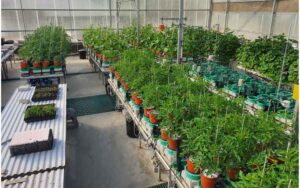
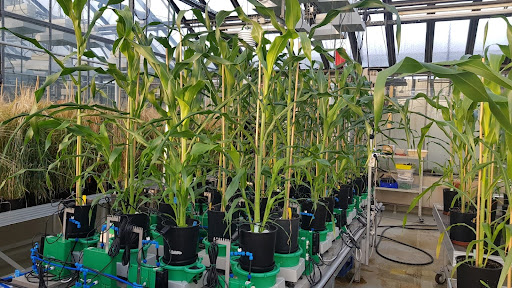
PlantArray set up in Gottingen University, Germany
How Flexible and Customizable Are plant-ditech Platforms?
Flexibility distinguishes plant-ditech platforms from rigid, specialized systems. Researchers can customize experimental designs, adjust environmental conditions, and integrate PlantArray data with other phenotyping modalities or molecular analyses. The SPAC software interface provides intuitive visualization and analysis tools accessible to users without programming expertise, democratizing advanced phenotyping capabilities across research institutions of varying sizes and resources. Plant-ditech offers customizable configurations tailored to specific research or cultivation requirements, ensuring the system adapts to diverse crop types from model organisms like Arabidopsis to major agricultural species including wheat, corn, tomato, citrus, and potato. The platform supports remote monitoring capabilities, enabling uninterrupted data collection and real-time experiment management from anywhere in the world.
Scalable Implementation Options
Scalability enables progressive implementation. Starting with a modest number of measurement units, programs can expand capacity as needs grow and budgets allow. This modular approach reduces initial barriers to adoption while preserving the option for high-throughput operation. Many institutions have successfully deployed plant-ditech systems for diverse applications ranging from fundamental plant physiology research to applied breeding programs focused on major crops like wheat, corn, tomato, and potato. The proven reliability of PlantArray, combined with its ability to deliver research-grade data from day one, ensures that even initial modest investments generate immediate value while building toward comprehensive phenotyping capabilities that rival much larger, more expensive platforms.
Case Studies in Crop Improvement
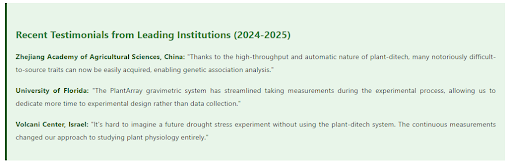
Research published in multiple peer-reviewed journals documents PlantArray’s effectiveness for accelerating genetic studies. Scientists at the Volcani Center in Israel utilized the system for whole-plant water relation studies, enabling effortless simultaneous measurement of diurnal performance across relevant physiological parameters. This work significantly enhanced understanding of drought response mechanisms and identified genetic markers associated with water-use efficiency. The plant-ditech system has been featured in over 80 scientific publications worldwide, including studies published in prestigious journals such as New Phytologist, Frontiers in Plant Science, and Horticulture Research, demonstrating its reliability and impact across diverse research applications from barley and wheat to vegetable crops and forest trees. Researchers consistently report that PlantArray changed their approach to studying plant physiology, with one noting that “it’s hard to imagine a future drought stress experiment without using the plant-ditech system.”
How Are Researchers Worldwide Using plant-ditech Platforms?
University researchers across the globe have adopted plant-ditech platforms for diverse scientific applications. Drought tolerance screening in legumes, characterization of genetically modified plants, evaluation of breeding lines under stress conditions, and fundamental physiological studies all benefit from the continuous, precise measurements these systems provide. Recent studies published in 2024-2025 demonstrate PlantArray’s versatility across multiple crops. Research on precision phenotyping of a barley diversity set revealed distinct drought response strategies, while studies on vegetable legume water conservation traits provided new insights into crop resilience. Investigations into strawberry responses to drought stress combined transcriptomic and metabolomic analyses alongside PlantArray physiological data, showcasing the platform’s integration with advanced molecular techniques.
What Do Researchers Say About Automated Phenotyping Benefits?
Testimonials from users consistently emphasize the transformative impact of automated phenotyping on research efficiency and quality. The Zhejiang Academy of Agricultural Sciences in China reported that “thanks to the high-throughput and automatic nature of plant-ditech, many notoriously difficult-to-source traits can now be easily acquired, enabling genetic association analysis.” Researchers at the University of Florida note that the PlantArray gravimetric system has “streamlined taking measurements during the experimental process,” allowing them to dedicate more time to experimental design rather than data collection. These advantages translate into time savings, improved data quality, and new research possibilities that were previously impractical with manual measurement approaches.
Why Are Modern Phenotyping Platforms Faster Than Traditional Methods?
The ability to conduct genetic experiments with precision fundamentally changes research timelines. Identifying optimal strains or specific genes responsible for desired traits traditionally required multiple growing seasons and subjective field assessments. Scientific evidence demonstrates that automated phenotyping condenses this process into weeks rather than years, directly accelerating the development of improved varieties suited to changing agricultural conditions. Plant-ditech technology delivers this acceleration by providing continuous physiological monitoring that reveals trait expression patterns invisible to periodic manual measurements, enabling researchers to make confident decisions based on comprehensive data rather than limited observations. This transformation represents a paradigm shift in plant breeding, where research programs can now complete in one season what previously required three to five years of field testing.
Why Choose Plant-Ditech for Your Phenotyping Needs?
Selecting phenotyping equipment represents a significant commitment that shapes research capabilities for years. Plant-ditech stands out through a combination of technological sophistication, practical design, and comprehensive support that maximizes research impact. The gravimetric approach provides direct physiological measurements unmatched by imaging-only systems, capturing actual water flux and growth responses with exceptional temporal and quantitative resolution. Where traditional methods require 50-100 individual leaf measurements to estimate whole-plant conductance, taking hours of skilled labor, the plant-ditech system provides continuous automated measurements of entire plants with 0.1g precision.This precision, combined with measurements taken 500 times daily, delivers insights impossible to achieve through conventional approaches.
User-Friendly Operation
User-friendly operation reduces the technical barriers that sometimes limit phenotyping adoption. Researchers without extensive engineering or programming backgrounds can design experiments, monitor ongoing studies, and analyze results through intuitive software interfaces. Automated protocols handle routine tasks like irrigation scheduling and data collection, freeing scientific staff to focus on experimental design and interpretation rather than equipment operation.
Comprehensive Research Support
Plant-ditech supports the full research lifecycle from initial consultation through data publication. Technical experts assist with system configuration, protocol optimization, and troubleshooting. Training programs ensure staff can operate equipment effectively. Ongoing software updates incorporate new analytical capabilities and improve usability based on community feedback. This comprehensive support model helps research programs achieve return on investment quickly while building internal expertise for long-term success. The company’s foundation by academic scientists from the Hebrew University, combining expertise in plant physiology and soil science, ensures that PlantArray development remains grounded in real research needs. Major research institutions and commercial R&D divisions worldwide, including organizations like Mars Wrigley, ICL, and leading universities, have adopted the platform for applications ranging from gene discovery to variety development, confirming plant-ditech’s position as a trusted partner for serious agricultural research.
Ready to Transform Your Crop Research with PlantArray?
Agricultural innovation depends on accurate phenotypic data that reveals how genetic improvements perform under real-world stress conditions. Traditional methods create bottlenecks that slow variety development precisely when climate change and population growth demand acceleration.Plant-ditech offers proven automated phenotyping solutions backed by over 80 peer-reviewed publications and adoption by leading research institutions worldwide. The PlantArray system delivers laboratory-quality physiological measurements at population scale, transforming crop improvement approaches. Whether screening for drought tolerance, validating genetic modifications, conducting fundamental plant physiology research, or accelerating breeding cycles, plant-ditech platforms provide the precision, throughput, and reliability modern agricultural science demands. Contact plant-ditech today to discover how automated phenotyping can accelerate your research and contribute to sustainable agriculture.