
Home » Applications » Whole plant Physiology
Understanding Whole Plant Physiology
Researchers and plant breeders are increasingly turning to nature to understand how plants adapt to harsh environmental conditions.
Identifying genotypes with traits that improve drought or salinity tolerance could enhance crop production and stability.
Plants, especially wild species, exhibit significant phenotypic plasticity. This flexibility is influenced by genotype-by-environment interactions (GxE).
These interactions make plant screening more complex. They also complicate the identification and isolation of specific quantitative physiological traits (QPTs).
The relationships between physiological traits and their responses to environmental changes are difficult to quantify.
As environmental conditions change, QPTs may respond differently within individual genotypes and across diverse plant populations.
Understanding these variations is essential for improving plant phenotyping and selecting resilient crop varieties.
Automated Plant Phenotyping for Large-Scale Population Analysis
The PlantArray phenotyping system enables automated monitoring of multiple plants and populations under the same environmental conditions.
Researchers can measure individual plants and entire populations simultaneously. The number of replicates depends on the available growing facility capacity.
This approach supports consistent analysis of plant physiological responses. It also allows researchers to compare genotypes and identify differences in phenotypic performance.
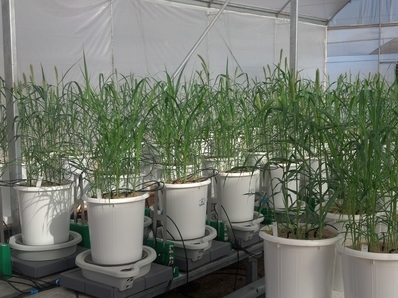
Key benefits of using PlantArray:
High-Throughput Plant Phenotyping: Enables functional performance analysis across multiple crop varieties and cultivars.
Continuous Physiological Monitoring: Measures growth rates, transpiration, water use efficiency (WUE), stomatal conductance, root activity, and environmental parameters.
Controlled Experimental Conditions: Supports simultaneous testing under different soil and irrigation conditions, including drought, salinity, and chemical treatments.
Real-Time Data Analysis: Provides immediate feedback, detailed statistical analysis, and clear graphical visualization of plant performance.
Faster Experimental Results: Enables researchers to complete certain plant phenotyping experiments within just 3–4 weeks.