

Home » Applications » Abiotic stress in plants
Abiotic stress in plants
Modern crops reach high yields, yet are susceptible to abiotic stress. Improving crop stress response is a great challenge due to the complexity of GxE interactions, in particular during climate change. To meet increased global food demand, researchers are working to develop crops optimized for the deteriorating conditions.
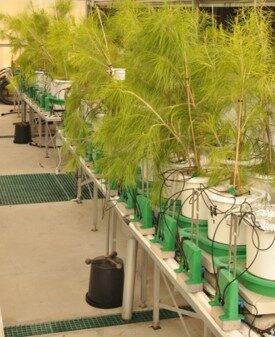
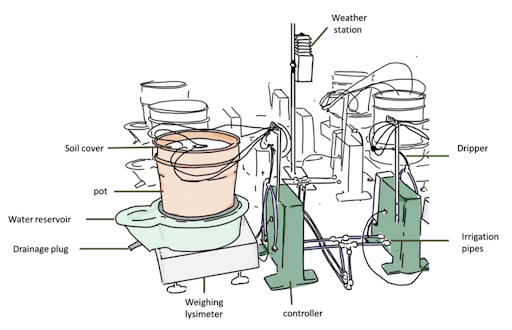
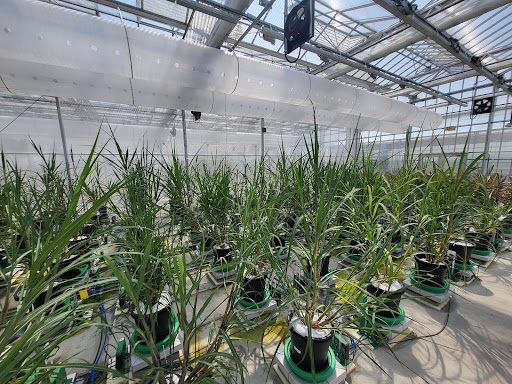
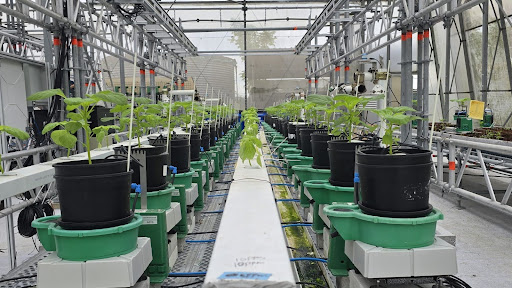
The PlantArray phenotyping system was specifically designed for research under abiotic stress conditions. It provides simple-to-use hardware and software tools that automatically control the irrigation treatment (quality and quantity) of each pot in the array throughout the experiment, analyzing each plant’s response to the controlled treatment.
To ensure high precision, the PlantArray has a patented structure that prevents water leakage and eliminates soil surface evaporation, allowing for accurate, repeatable measurements of whole-plant physiological responses under defined environmental conditions.
These features significantly reduce the complexity of studying plant responses to water-limited environments, by precisely identifying stress thresholds under controlled conditions – with strong correlation to field results.
Temperature
The PlantArray system uses sensors to monitor real-time canopy and ambient temperatures, transpiration, and stomatal conductance. Precise irrigation control prevents unintended drought stress.
PlantDitech’s feedback irrigation system regulates water based on transpiration rates, ensuring consistent stress conditions. This improves the accuracy and reliability of experimental results.
Drought
We measure drought impact on plants by monitoring key physiological parameters such as water use efficiency, Biomass, Transpiration and more.
It utilizes high-precision sensors and data analytics to provide real-time insights into plant responses under drought conditions, enabling researchers to assess plant resilience and optimize water usage.
Salinity
The PlantArray platform measures salinity impact on plants by tracking vital parameters like ion uptake, growth rates, and soil salinity levels. It employs advanced sensors and data analytics to provide real-time data on plant responses to salinity stress, helping researchers understand tolerance mechanisms and develop strategies for managing saline conditions.
Flood
As flooding events become more and more common in large areas of the world due to global diseases, the Planet Ari system (together with our flood kit) examines the effect of flooding on plants while performing screening of many plants simultaniesly
Key benefits of using PlantArray for your abiotic experiments:
- High-throughput functional performance analysis
- Continuously measures multi-key functional. (physiological) traits such as growth rates, transpiration rates, water-use-efficiency, stomatal conductance, root activity and more.
- Simultaneously control many different soil and water scenarios (e.g. drought, salinity and/or chemicals).
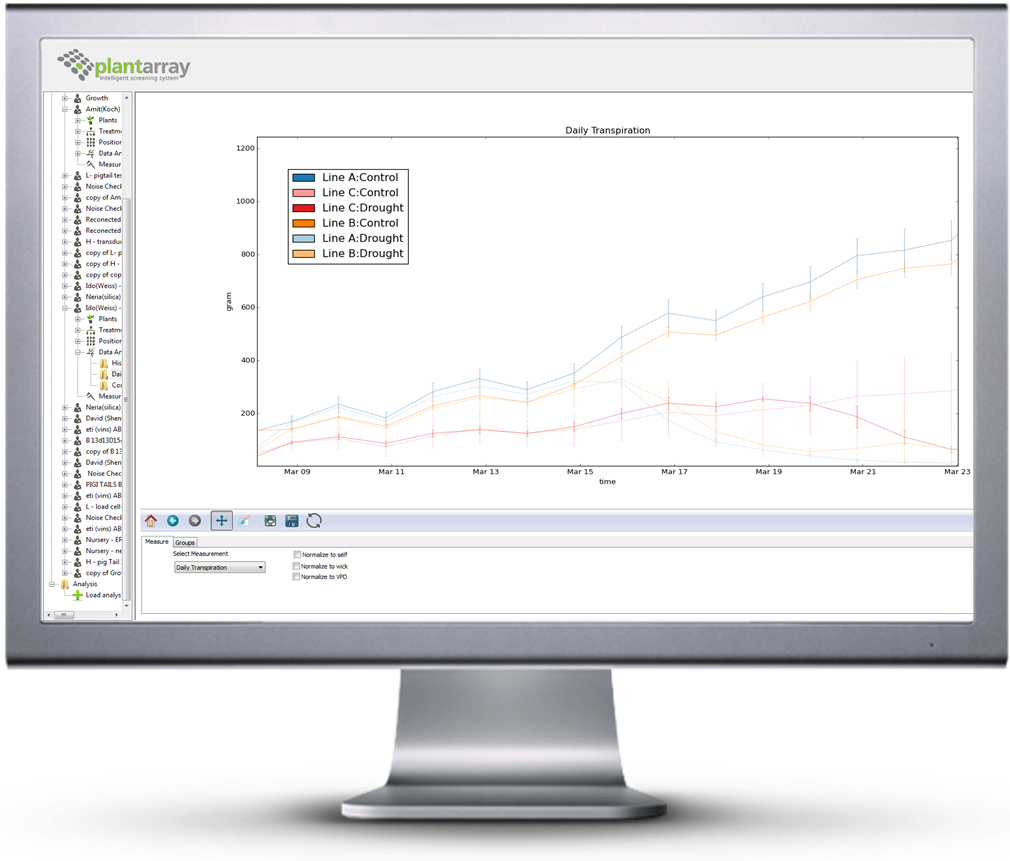
- Instant feedback and real-time in-depth statistical analysis of plant performance with a clear graphical presentation.
- Quick results within four to six weeks.
Real-time experimental control:

Continuous average (Growth rate)
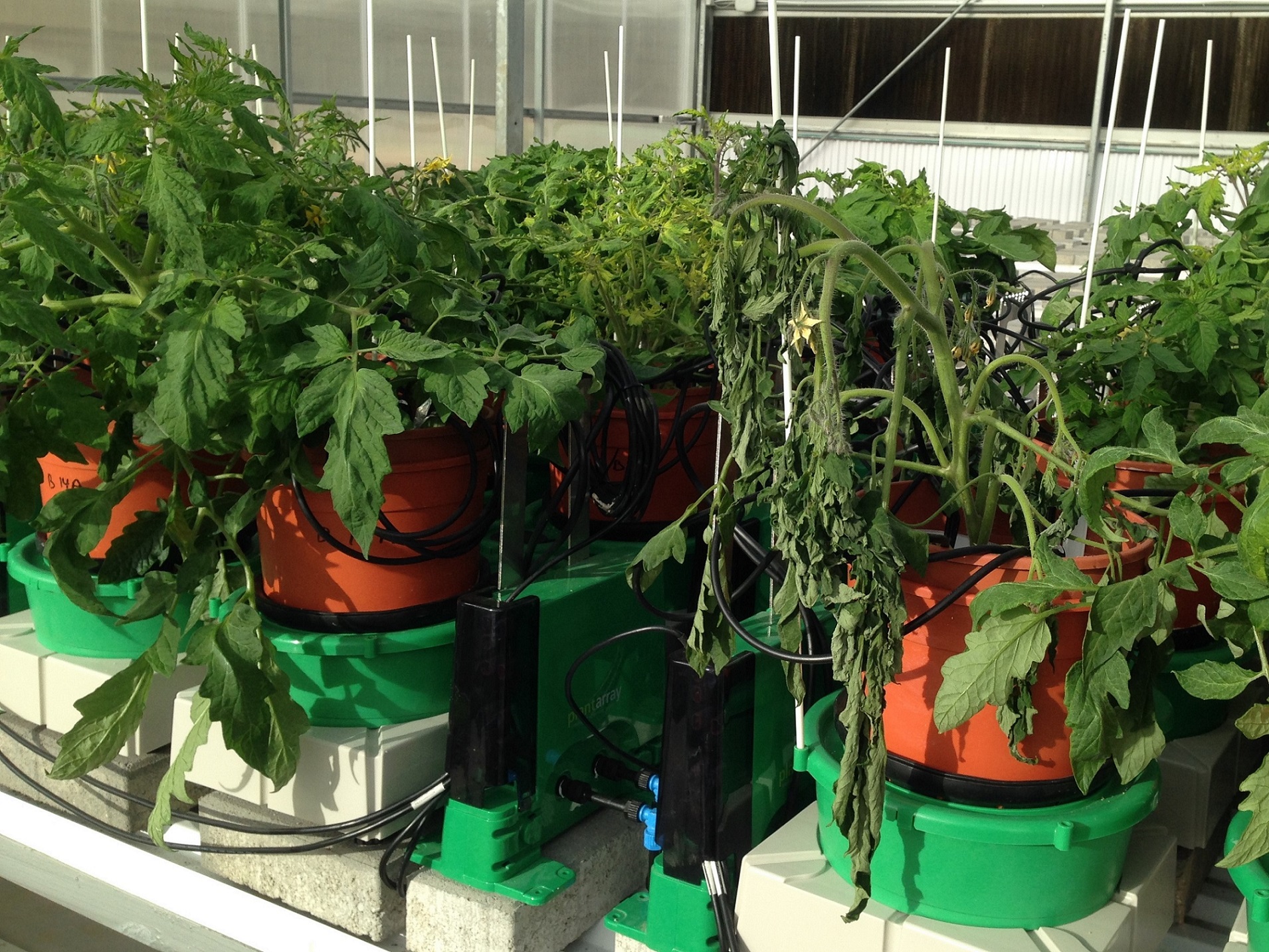
Drought treatment vs well irrigated control
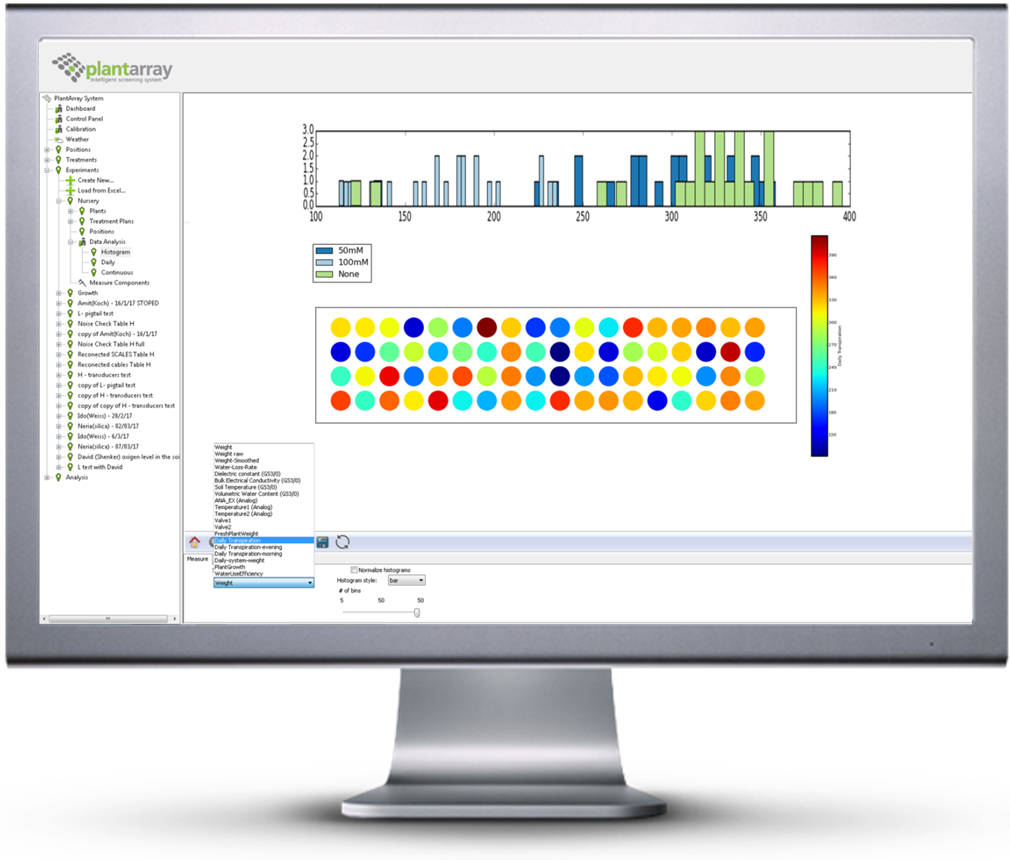
Heat map and histogram (Growth rate)
In the quest to secure future food production amid global climate change, understanding the effects of abiotic stress on plants has become increasingly important. Abiotic stress refers to the negative impact environmental factors such as drought, salinity, extreme temperatures, and toxic substances have on plant growth, development, yield, and seed quality. These stresses pose a significant challenge to modern agriculture, which strives to produce high-yield crops that are, however, often susceptible to such stressors.
The complexity of genotype-environment (GxE) interactions, particularly during climate change, complicates the improvement of crop stress responses. This article delves into the realm of abiotic stress in plants, highlighting the pivotal role of advanced phenotyping systems like the PlantArray, developed by Plant-Ditech, in understanding and mitigating these effects. Through this exploration, we aim to shed light on the importance of accurate physiological phenotyping and the development of crops optimized for the deteriorating conditions brought about by climate change, ultimately contributing to global food security.
What is Abiotic Stress and How Does it Impact Plants?
Abiotic stress in plants is induced by non-living environmental factors that adversely affect their growth, development, and productivity. These stressors include a broad spectrum of conditions such as drought, salinity, water-logging, extreme temperatures (both cold and heat), and exposure to toxic substances. Each of these factors can trigger a unique set of physiological, biochemical, and molecular responses in plants, leading to a significant reduction in their overall health and yield.
Drought Stress: The Thirst of Plants
Drought stress occurs when water availability drops below the necessary level for optimal plant growth, leading to dehydration. This condition affects plants’ water-use efficiency, disrupts photosynthesis, and can cause wilting, leaf senescence, and ultimately, if prolonged, plant death. Drought stress is one of the most common and severe forms of abiotic stress, significantly impacting agricultural productivity worldwide.
Salinity:
Salinity stress is caused by high concentrations of salt in the soil, which can inhibit plants’ ability to take up water, leading to ionic and osmotic stress. This form of stress can disrupt the internal water balance of plants, hinder nutrient uptake, and cause ion toxicity. Plants experiencing salinity stress may exhibit stunted growth, leaf burn, and lower yield.
Temperature Extremes:
Extreme temperatures, whether hot or cold, pose significant challenges to plant survival and productivity. Heat stress can lead to overheating, denaturation of vital proteins, and increased evaporation, causing dehydration. Conversely, cold stress can result in ice formation within plant tissues, cellular damage, and reduced metabolic activity. Both conditions can severely impact plant growth and reproductive development.
Toxic Substances:
Exposure to toxic substances, such as heavy metals and pollutants, can lead to oxidative stress in plants. These substances can accumulate in the soil and be absorbed by plants, disrupting cellular functions, damaging DNA, and impairing photosynthesis. The resultant stress can lead to reduced growth and fertility, and in severe cases, plant death.
In response to these abiotic stresses, plants have evolved sophisticated mechanisms to perceive stress signals and initiate adaptive responses. These include changes in gene expression, activation of stress-responsive pathways, accumulation of protective solutes, and modifications in physiological traits. However, the efficiency of these responses can vary significantly among different plant species and cultivars, influencing their ability to withstand abiotic stress. Understanding the mechanisms behind plant responses to abiotic stress is crucial for developing strategies to enhance crop resilience, ensuring sustainable agricultural production in the face of growing environmental challenges.
How Does the PlantArray Phenotyping System Analyze Plant Response to Abiotic Stress?
In the face of the challenges posed by abiotic stress to plant health and crop productivity, the PlantArray phenotyping system emerges as a cutting-edge solution. Developed by Plant-Ditech, a company founded on innovation from the Hebrew University of Jerusalem, this system offers a sophisticated approach to understanding and mitigating the effects of environmental stressors on plants.
The Essence of PlantArray Phenotyping System
At its core, the PlantArray system is designed to provide a comprehensive and accurate physiological trait analysis of plants under various environmental conditions. It utilizes advanced hardware and software to automatically control the irrigation treatment of each pot within an array throughout an experiment. This precise control allows for the analysis of each plant’s response to specific abiotic stresses, such as drought, salinity, extreme temperatures, and exposure to toxic substances.
High-Throughput Functional Performance Analysis
One of the standout features of the PlantArray system is its ability to perform high-throughput functional performance analysis. This means it can simultaneously measure multiple key physiological traits, including growth rates, transpiration rates, water-use efficiency, stomatal conductance, and root activity. By continuously monitoring these traits, the system provides valuable insights into how plants adapt to and cope with abiotic stress conditions.
Real-Time Feedback and In-Depth Statistical Analysis
The PlantArray system offers instant feedback and real-time, in-depth statistical analysis of plant performance. This feature is invaluable for researchers and breeders as it allows for the quick identification of plant varieties that exhibit superior stress tolerance. The clear graphical presentation of data simplifies the interpretation of complex plant responses, facilitating the development of crops optimized for resilience to environmental stressors.
Implications for Crop Breeding and Environmental Adaptation
By characterizing plant phenotypes in response to abiotic stress, the PlantArray system aids in predicting yield performance under adverse conditions. This capability is crucial for advancing crop breeding efforts, particularly in the context of climate change. Through the detailed analysis provided by the PlantArray system, researchers can identify genetic traits and physiological mechanisms that confer stress tolerance, paving the way for the engineering of crops better suited to withstand the challenges of a changing environment.
In summary, the PlantArray phenotyping system stands as a pivotal tool in the study of plant response to abiotic stress. Its comprehensive analysis capabilities not only deepen our understanding of plant physiology but also drive innovation in crop development, ensuring that future food production can adapt to and thrive under the stresses posed by global climate change.
Why is Accurate Physiological Phenotyping Crucial for Crop Breeding?
The global agricultural landscape is facing unprecedented challenges due to climate change, with abiotic stresses such as drought, salinity, and extreme temperatures threatening crop productivity and food security. In this context, accurate physiological phenotyping has emerged as a cornerstone for advancing crop breeding efforts, enabling the development of resilient crop varieties optimized for the rapidly changing environment.
Bridging Genotype and Phenotype
Accurate physiological phenotyping bridges the gap between a plant’s genetic potential (genotype) and its observable characteristics (phenotype) under various environmental conditions. This process involves the detailed measurement of physiological traits that influence plant performance, such as growth rates, water-use efficiency, and stress tolerance. By linking specific physiological traits to genetic markers, breeders can select and propagate plants with desirable characteristics, accelerating the development of stress-resistant crops.
Enhancing Stress Tolerance through Phenotyping
Abiotic stresses disrupt plant growth and reduce yield by altering physiological processes. Accurate phenotyping allows researchers to identify and quantify these alterations, providing insights into how plants respond to stress at the molecular and cellular levels. Such detailed analysis is essential for uncovering the underlying mechanisms of stress tolerance, which can then be targeted in breeding programs to enhance the resilience of future crop varieties.
Precision Breeding for Optimized Crop Performance
The precision offered by advanced phenotyping systems like the PlantArray phenotyping system is pivotal for precision breeding. This approach to crop breeding relies on the accurate selection of traits that contribute to optimal performance under specific environmental conditions. By focusing on the precise traits that improve stress tolerance, breeders can develop crops that not only survive but thrive in adverse conditions, ensuring sustainable agricultural productivity.
Accelerating Crop Improvement and Adaptation
Accurate physiological phenotyping accelerates the process of crop improvement and adaptation to environmental stressors. The ability to quickly and accurately assess plant responses to various abiotic stresses enables breeders to make informed decisions, reducing the time and resources required to bring resilient crop varieties to market. This rapid advancement is crucial for keeping pace with the demands of a growing global population and the challenges posed by climate change.
In conclusion, accurate physiological phenotyping is indispensable for modern crop breeding efforts. It provides the foundation for understanding plant responses to abiotic stress, guiding the development of resilient crop varieties that are essential for securing future food production. Through the integration of advanced phenotyping technologies during the research stage, the agricultural sector can rise to the challenges of climate change, ensuring a stable and sustainable food supply for generations to come.
Advancing Crop Resilience to Abiotic Stress
The escalating challenges of climate change and abiotic stresses such as drought, salinity, and extreme temperatures underscore the urgent need for resilient crop varieties. Advances in physiological phenotyping, epitomized by the PlantArray phenotyping system, are pivotal in meeting this need. By providing an accurate, detailed analysis of plant responses to environmental stresses, these technologies offer invaluable insights into the complex interplay between genotype and phenotype under adverse conditions.
Accurate physiological phenotyping serves as a cornerstone in the development of stress-tolerant crops, bridging the gap between genetic potential and optimal performance in the face of environmental challenges. The precision and depth of analysis afforded by systems like the PlantArray enable breeders to select for traits that enhance stress tolerance, thereby accelerating the breeding process and ensuring the sustainability of agricultural productivity.
In conclusion, the integration of advanced phenotyping technologies into crop breeding programs is essential for advancing crop resilience to abiotic stress. As the global community faces the pressing challenges of climate change and food security, the role of accurate physiological phenotyping in securing the future of food production cannot be overstated. Through innovation and research, we can develop crops that not only survive but thrive in changing environmental conditions, ensuring a stable and abundant food supply for future generations.