
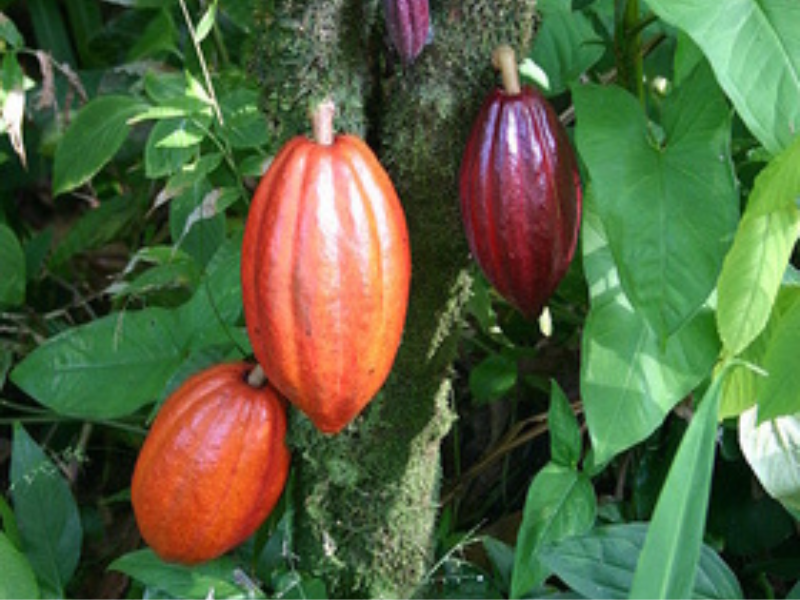

Would you believe about 1,700 liters of water is required to produce a 100g bar of chocolate? This seems like a ridiculously high number. So, in the famous words of Julius Sumner-Miller, “Why is it so?”
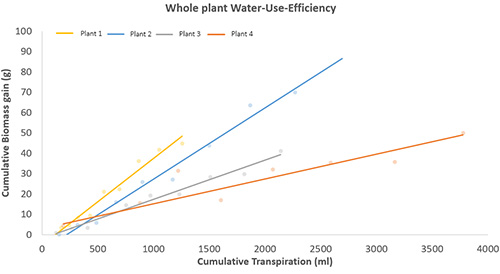
Well, the Cocoa tree, which provides the core ingredient of our chocolate, consumes copious amounts of water yet has a low yield (number of beans per tree). And this astonishing fact is not limited to cocoa. The linear tradeoff between water consumption and a plant’s production yield has been extensively documented. Due to water limitations and climate change, one of the greatest challenges agro-scientists face today is how to overcome this tradeoff in order to improve the plant Water-Use-Efficiency while maintaining high productivity.Crops demand enormous amounts of water when producing yield. For example, to produce 1kg of white rice requires about 2,500 liters of water; and corn is no slouch either at about 1,200 liters on average.[1]
In fact, most of the water transpires to the air as a side effect to photosynthesis CO2 absorption.
Water-Use-Efficiency
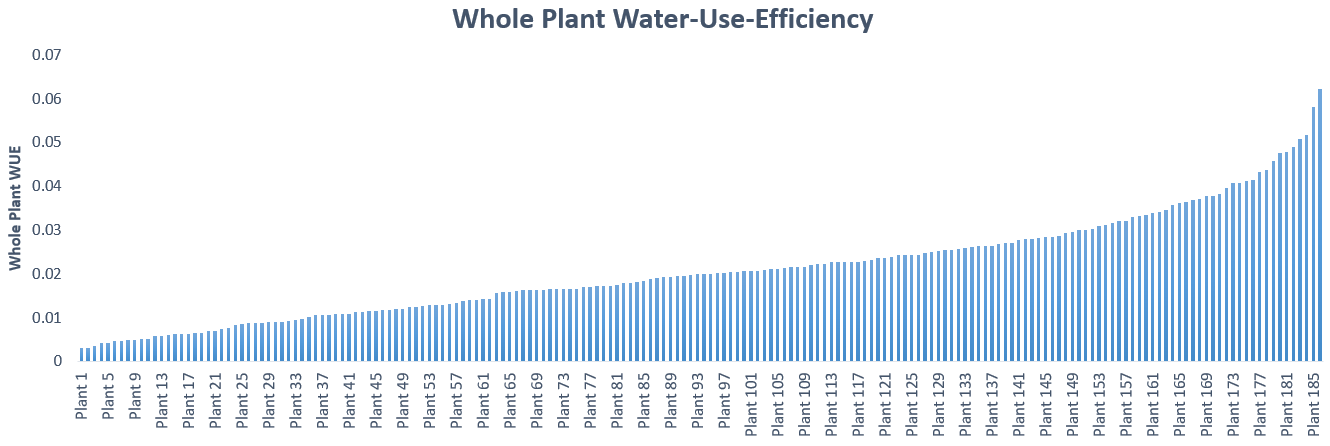
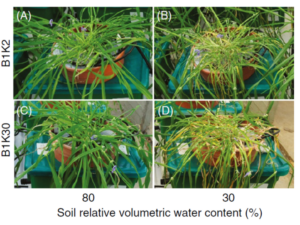
Water-use efficiency describes the amount of biomass produced per unit of water transpired. Researchers can combine this trait with continuous measurements of biomass, whole-plant water balance, and environmental water status. These measurements include transpiration and root water influx. Together, this information provides a holistic view of plant–water relations. It also reveals how plants respond dynamically to environmental changes. Plant water status is closely linked to growth and yield. Therefore, profiling many plants simultaneously helps researchers compare water management and productivity under different environmental conditions. Researchers can then identify plants that effectively balance water use and biomass production.

And this is the exact approach of PlantDitech.
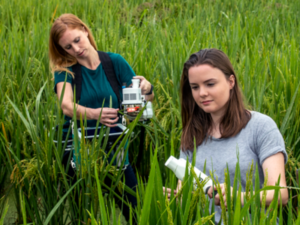
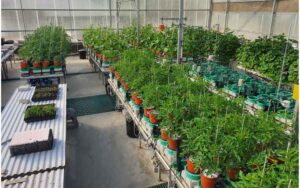
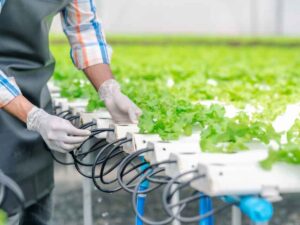
Our technology continuously measures whole-plant water balance alongside soil conditions, atmospheric conditions, and plant biomass. Plant-DiTech monitors many plants simultaneously and analyzes their data using advanced analytical tools. This process creates a detailed physiological profile of each plant under changing environmental conditions. Researchers can use these profiles to characterize and compare plant growth, water use, and productivity. The resulting data helps identify top-performing plants based on their functional physiological traits. These insights can support higher crop yields, improved water-use efficiency, and stronger stress responses.


