


Introduction
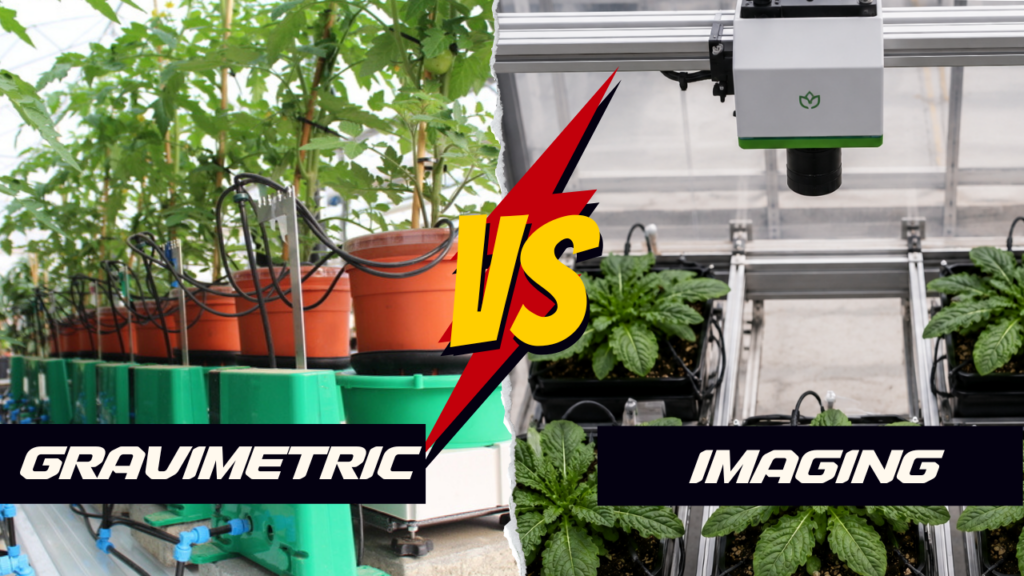
As global challenges such as climate change, food security, and resource limitations intensify, the need for efficient and precise plant research tools has become increasingly important. Plant screening systems play a central role in this effort by enabling researchers to evaluate plant traits, identify high-performing genotypes, and better understand plant responses to environmental stress. Among the available technologies, two dominant approaches have emerged: gravimetric (lysimetric) phenotyping systems and imaging-based phenotyping systems. While both aim to characterize plant performance, they differ fundamentally in what they measure, how they detect stress, and the contexts in which they are most effective.
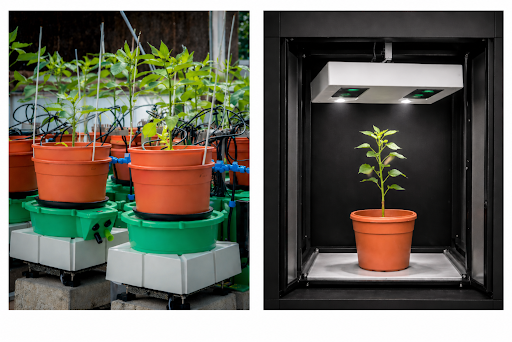
Fig 1: Gravimetric vs Imaging phenotyping systems
What Are the Principles of Gravimetric Phenotyping?
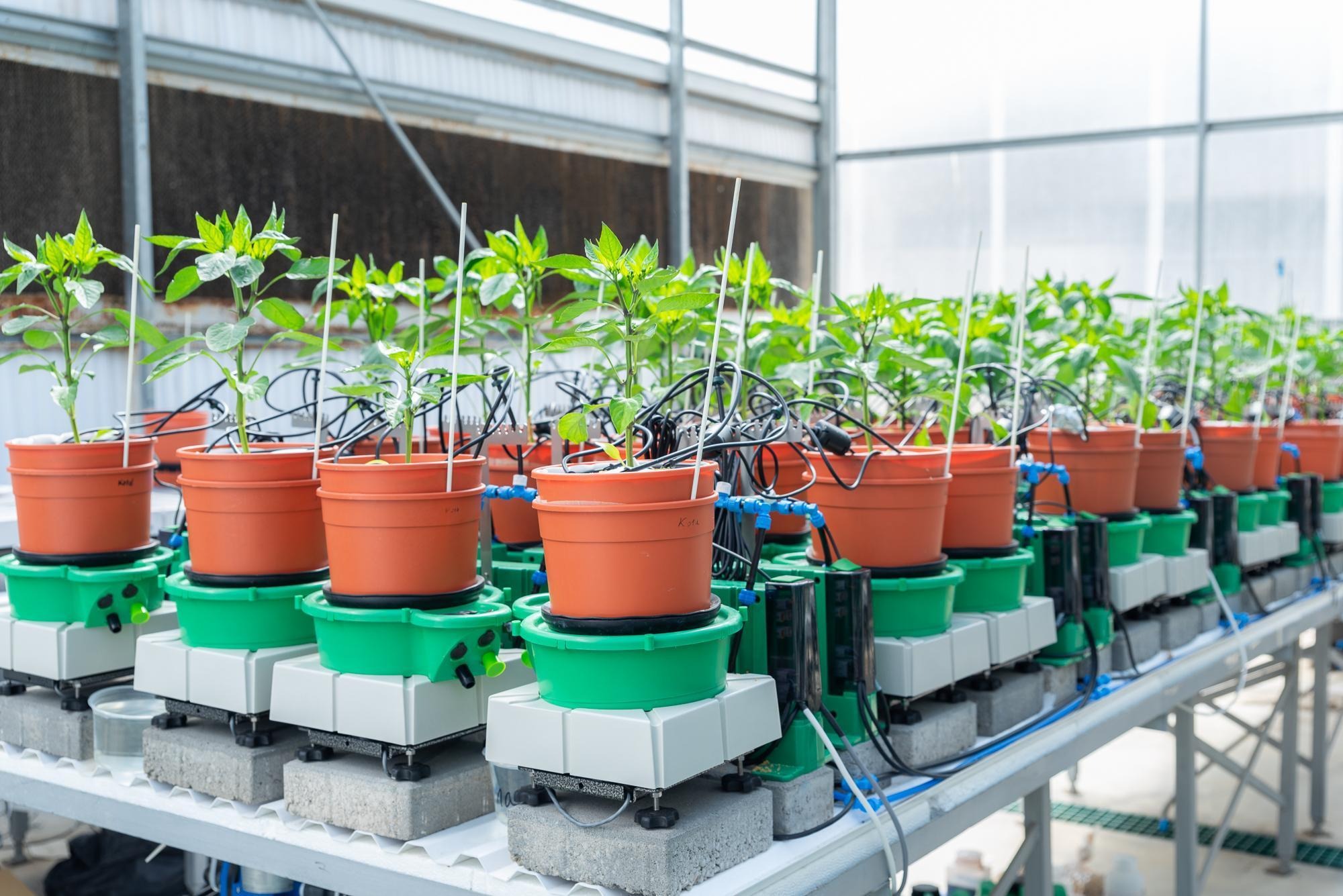
Gravimetric phenotyping systems measure plant responses through changes in weight over time, allowing researchers to quantify parameters such as transpiration, water-use efficiency, and biomass accumulation. These systems provide direct insight into plant physiological processes, particularly those related to plant-water relations. Because transpiration reflects stomatal behavior and plant water status, gravimetric systems capture real-time physiological dynamics. This enables continuous monitoring under controlled or semi-controlled environmental conditions, supporting detailed analysis of plant-environment interactions. The advanced platforms combine sensors and automatic data collection, and can monitor multiple parameters simultaneously while maintaining high accuracy. This allows researchers to correlate physiological traits with environmental variables and genetic differences, supporting applications in breeding, stress physiology, and sustainable agriculture.
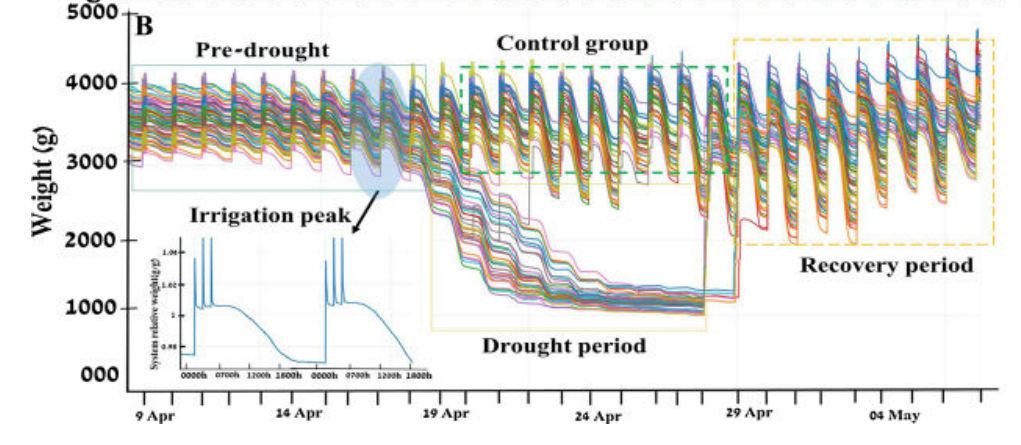
Fig 2: Dynamic physiological traits measured by Plantarray: young tomato plants showed strong potential to predict later field-yield performance, highlighting the value of early gravimetric phenotyping for faster selection decisions. Adapted from Gosa, S. C., et al. (2022). Plant Science, 314, 111122.
What Are the Principles of Imaging Phenotyping?
Imaging phenotyping systems rely on imaging technologies, including RGB, thermal, and multispectral cameras, to assess plant traits. These systems typically measure morphological and visual characteristics, such as plant size, leaf area, color, and canopy temperature. Unlike gravimetric systems, Imaging approaches do not measure physiological processes directly. Instead, they infer plant status from observable traits.
For example:
- Reduced growth or reduced leaf area may indicate stress or a change in growth pattern from generative to productive.
- Color changes may reflect chlorophyll breakdown, water deficiency, or leaf senescence.
- Increased canopy temperature may suggest reduced transpiration
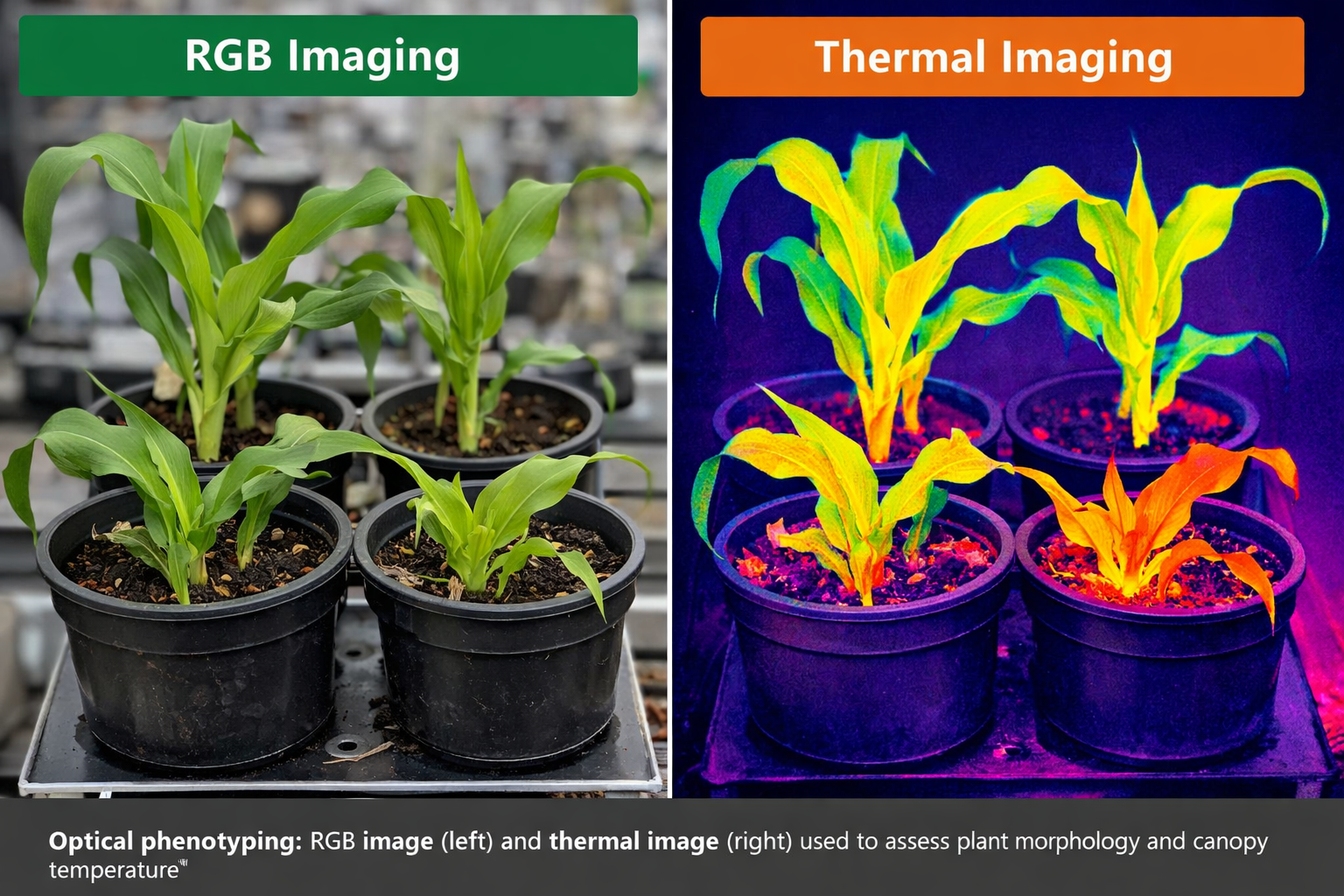
Detection of Plant Stress: Physiology Versus Appearance
One of the main differences between gravimetric and Imaging phenotyping systems is when plant stress can be detected, a factor that directly impacts experimental sensitivity, data quality, and research outcomes.
Plant stress responses begin at the physiological level, well before any visible symptoms appear. Early indicators include stomatal closure, reduced transpiration rates, and shifts in internal signaling pathways. Only later do morphological symptoms such as wilting, reduced growth, or discoloration become visible.
Gravimetric phenotyping systems, such as PlantArray, continuously measure whole-plant water relations, including transpiration and water-use dynamics. This enables researchers to detect stress at its earliest physiological onset. In contrast, Imaging phenotyping systems rely on imaging-based traits and typically identify stress only after structural or visual changes have already occurred.
This difference is critical in applications such as drought research, genotype screening, and biostimulant evaluation, where early and subtle responses can determine experimental success. Detecting stress at the physiological stage allows for higher sensitivity in treatment comparisons and more accurate identification of plant performance under dynamic conditions.
This point is also supported by Moshelion et al. (2024), who show that physiological measurements, especially whole-plant transpiration, provide a more direct understanding of plant water use and drought response than Imaging observations alone. By tracking transpiration dynamics, researchers can better identify how different plants experience and respond to stress over time.
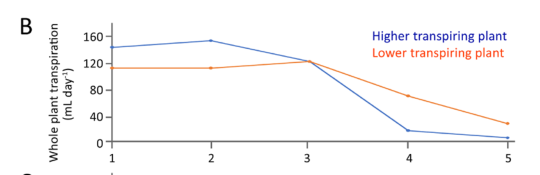
Figure 3.
Daily whole-plant transpiration under drought conditions. The graph illustrates how differences in transpiration can lead to unequal soil water depletion and stress intensity, emphasizing the value of physiological phenotyping for accurately interpreting drought responses. Adapted from Moshelion et al. (2024), Journal of Experimental Botany, 75(16), 4671-4679.
In addition to early stress detection, PlantArray supports advanced irrigation control at the individual plant level. Using real-time feedback from integrated transpiration, biomass, and soil moisture sensors, the system enables accurate and reproducible water management strategies. Researchers can simulate gradual drought conditions, apply differentiated stress treatments across plants, or maintain exact soil moisture thresholds, all within a controlled experimental framework.
Imaging phenotyping, on the other hand, does not allow for irrigation based on physiological parameters and only allows for regular irrigation, which is a significant difference in drought experiments. The plant can be watered exactly according to its needs, so gradual and more reliable drought treatment can be given, certainly in pot experiments.
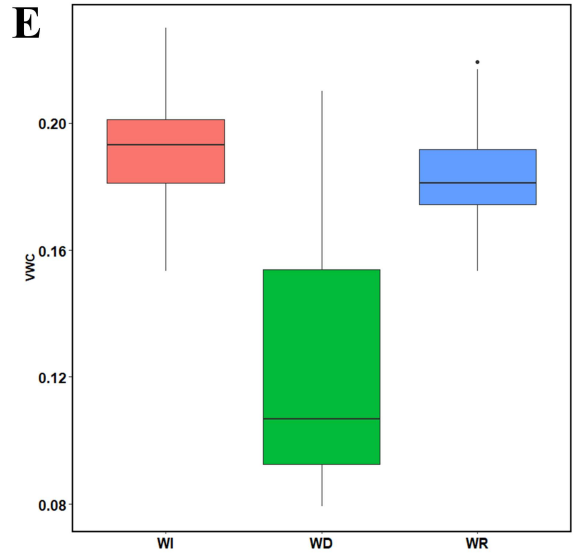
Figure 4.
Distribution of soil water content (VWC) under well-irrigated (WI), drought (WD), and recovery (WR) conditions. The pronounced decline during the drought phase highlights early physiological stress responses, while recovery levels demonstrate the sensitivity of gravimetric phenotyping systems in capturing dynamic plant-water interactions.
Adapted from: Cheng et al. (2025), Horticulturae, 11(11), 1374.
Conclusion
Gravimetric systems focus on direct physiological measurements, enabling early stress detection and detailed analysis of plant–water relationships. Imaging systems, on the other hand, assess visual traits such as leaf area, height, and color, which provide valuable experimental insights in their own right.
As plant research continues to evolve towards greater precision and data-driven decision-making, the ability to capture physiological data in real time and at high resolution becomes increasingly important. If you are a researcher seeking deeper insights into plant responses, especially under stress conditions, contact us soon, and we will be happy to schedule a short call to explore the suitability of PlantArray for your research.