
Home » Applications » Abiotic stress in plants
Abiotic stress in plants
Modern crops reach high yields, yet are susceptible to abiotic stress. Improving crop stress response is a great challenge due to the complexity of GxE interactions, in particular during climate change. To meet increased global food demand, researchers are working to develop crops optimized for the deteriorating conditions.
The PlantArray phenotyping system was specifically designed for research under abiotic stress conditions. It provides simple-to-use hardware and software tools that automatically control the irrigation treatment (quality and quantity) of each pot in the array throughout the experiment, analyzing each plant’s response to the controlled treatment.
To ensure high precision, the PlantArray has a patented structure that prevents water leakage and eliminates soil surface evaporation, allowing for accurate, repeatable measurements of whole-plant physiological responses under defined environmental conditions.
These features significantly reduce the complexity of studying plant responses to water-limited environments, by precisely identifying stress thresholds under controlled conditions – with strong correlation to field results.
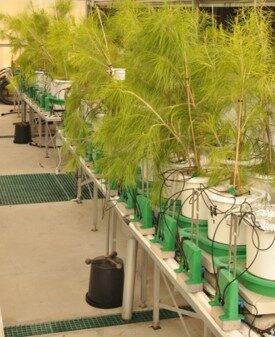
Temperature
The PlantArray system uses sensors to monitor real-time canopy and ambient temperatures, transpiration, and stomatal conductance. Precise irrigation control prevents unintended drought stress.
PlantDitech’s feedback irrigation system regulates water based on transpiration rates, ensuring consistent stress conditions. This improves the accuracy and reliability of experimental results.
Drought
We measure drought impact on plants by monitoring key physiological parameters such as water use efficiency, Biomass, Transpiration and more.
It utilizes high-precision sensors and data analytics to provide real-time insights into plant responses under drought conditions, enabling researchers to assess plant resilience and optimize water usage.
Salinity
The PlantArray platform measures salinity impact on plants by tracking vital parameters like ion uptake, growth rates, and soil salinity levels. It employs advanced sensors and data analytics to provide real-time data on plant responses to salinity stress, helping researchers understand tolerance mechanisms and develop strategies for managing saline conditions.
Flood
As flooding events become more and more common in large areas of the world due to global diseases, the Planet Ari system (together with our flood kit) examines the effect of flooding on plants while performing screening of many plants simultaniesly
Key benefits of using PlantArray for your abiotic experiments:
- High-throughput functional performance analysis
- Continuously measures multi-key functional. (physiological) traits such as growth rates, transpiration rates, water-use-efficiency, stomatal conductance, root activity and more.
- Simultaneously control many different soil and water scenarios (e.g. drought, salinity and/or chemicals).
- Instant feedback and real-time in-depth statistical analysis of plant performance with a clear graphical presentation.
- Quick results within four to six weeks.

Real-time experimental control:
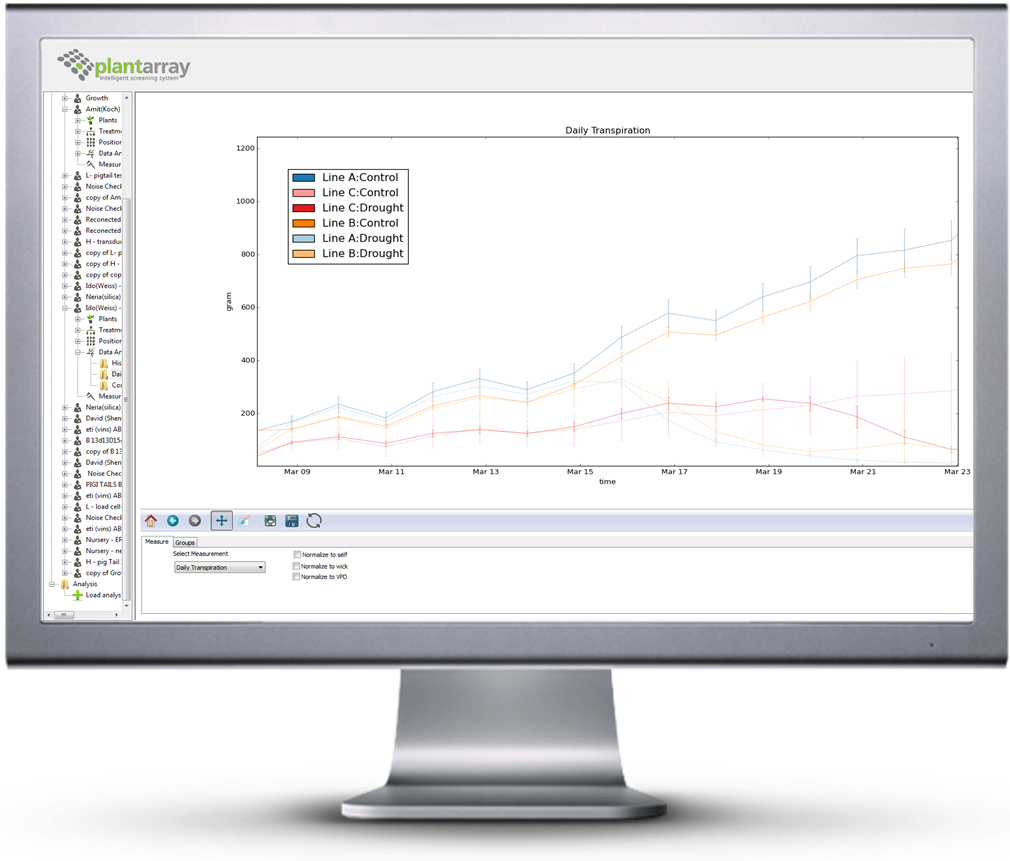
Continuous average (Growth rate)
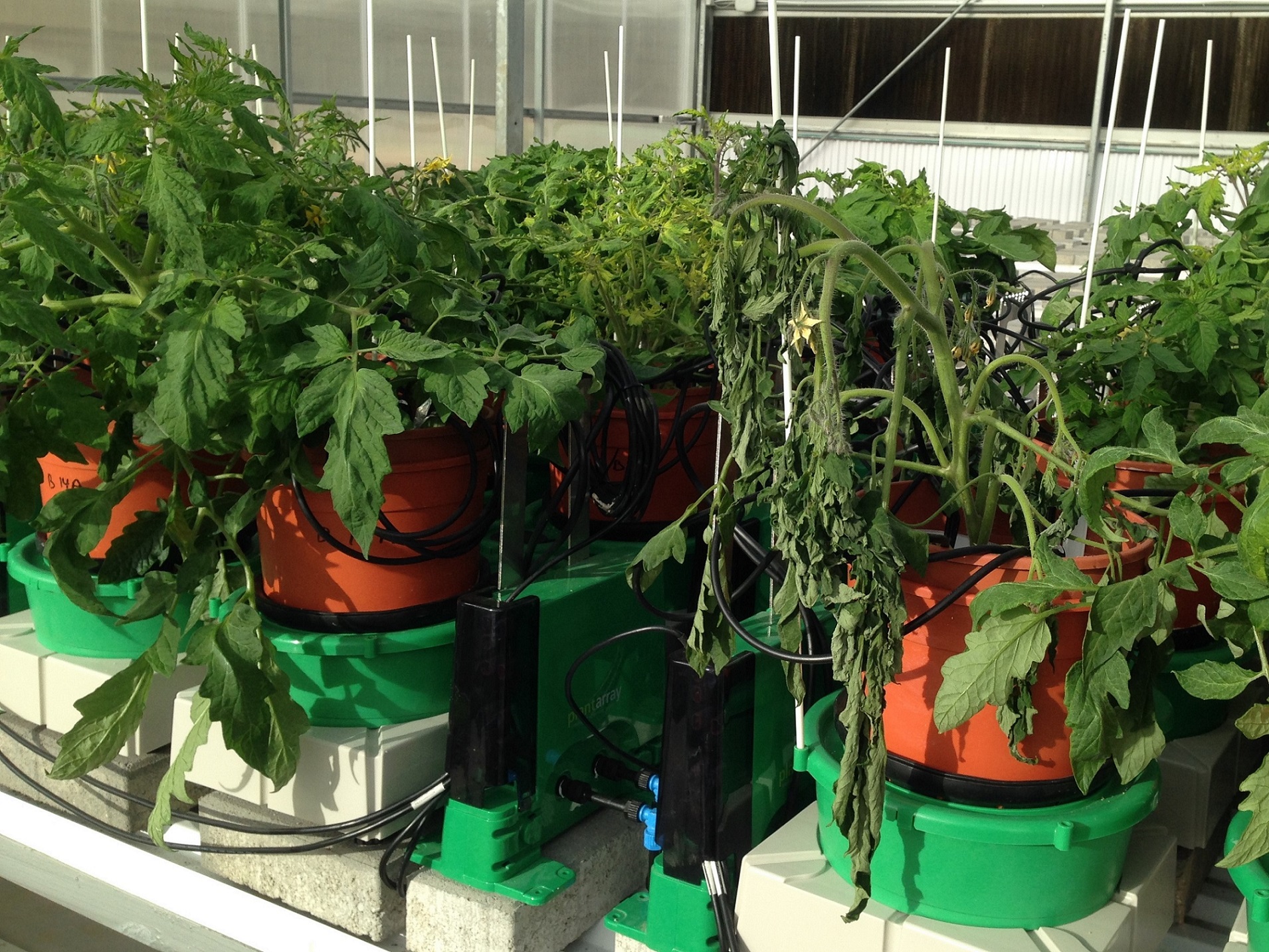
Drought treatment vs well irrigated control
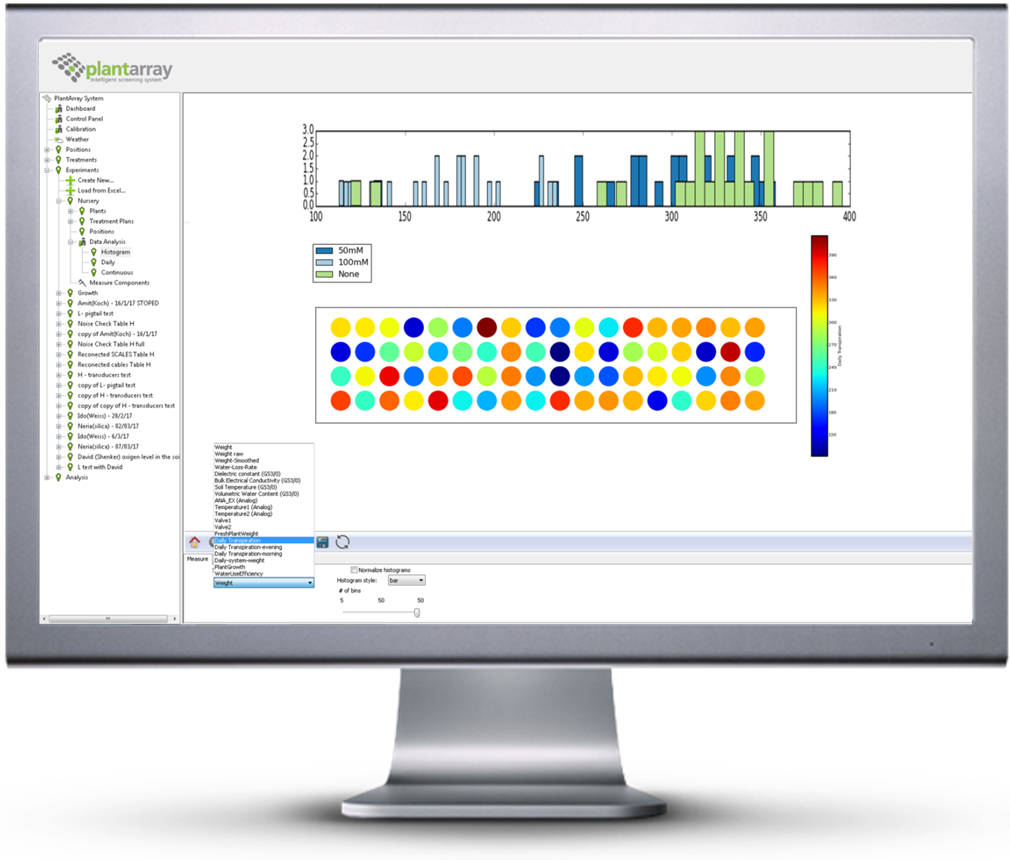
Heat map and histogram (Growth rate)